Compact perennials for containers
Match mature size to pot gallons, count your real sun hours, and plan one zone colder because a pot freezes through.
Updated 2026-09-17
We may earn a commission if you buy through links on this page. It never changes what you pay. How we make money
A perennial in a pot has to survive two things a perennial in the ground does not: a root zone that runs out of room and a root zone that freezes solid. This guide is for a deck, a balcony or a set of front-step pots where you want plants that come back rather than a tray of annuals every May. Three numbers decide it: mature size against pot volume, honest sun hours, and your zone minus one.
How to decide
Convert pot size into gallons, because that is the number that matters and nurseries talk in inches. A cylinder holds pi times the radius squared times the depth, divided by 231 cubic inches per gallon. Run the common sizes:
- 12 inch diameter, 10 inches deep: 1,131 cubic inches, or 4.9 gallons.
- 14 inch diameter, 12 inches deep: 1,847 cubic inches, or 8.0 gallons.
- 16 inch diameter, 14 inches deep: 2,815 cubic inches, or 12.2 gallons.
- 18 inch diameter, 14 inches deep: 3,563 cubic inches, or 15.4 gallons.
Then size the pot to the plant, not to the plant you bought. A useful rule is a pot diameter of at least half the mature width and a depth of at least 12 inches for anything meant to overwinter. So the 18 to 20 inch daylily and the 18 inch Sweet Romance lavender are 14 inch, 8 gallon plants; the 2 ft coneflower wants 14 to 16 inches; the 2 ft by 2 ft Tiny Tuff Stuff hydrangea wants 16 to 18 inches, and the 2.67 ft by 2.33 ft Phenomenal lavender wants a full 18 inch, 15 gallon pot. Note how fast that scales: an 18 inch pot holds three times the soil of a 12 inch one, which buys both water and winter survival.
Now count sun hours honestly, in the spot the pot will actually sit. Full sun means 6 or more hours of direct light, and the way to know is to look at 9 am, noon, 3 pm and 6 pm rather than guess from the compass. Both lavenders and the coneflower are full-sun plants and will stretch, flop and stop blooming at 4 hours. The hydrangea and the daylily are the two here listed for part shade as well, which makes them the only candidates for an east-facing porch or a spot behind a railing.
The winter rule is the one people learn the hard way: treat a container as one USDA zone colder than the tag, because a 14 inch pot of soil surrounded by air freezes through and thaws repeatedly, while ground soil holds heat. Worked example: in zone 5b, plan your pots as if they were 4b. The coneflower and the daylily are rated to zone 4, so they are safe. Sweet Romance and Tiny Tuff Stuff are rated to zone 5, which puts them right at the edge, and Phenomenal at zones 5 to 8 is the same story with a warmer ceiling. Edge cases are manageable: cluster pots against a house wall, sink them into a bed, move them to an unheated garage, or go up a pot size.
One more failure mode, specific to lavender: it dies of wet feet more often than of cold, so it needs a gritty free-draining mix, a real drainage hole and no decorative saucer under it. That is the opposite of what the hydrangea wants, which is why mixing these two in one large planter does not work.
Compared
| Pick | Mature size | Pot we would use | Light | Zones | Price |
|---|---|---|---|---|---|
| Hemerocallis Ruby Stella daylily | 18-20 in H x 18-24 in W | 14 in, 8 gal | Full sun to part shade | 4-9 | $9.95 |
| Lavandula Sweet Romance | 18 in H x 18 in W | 14 in, 8 gal | Full sun | 5-9 | $24.95 |
| Echinacea Sombrero Hot Coral | 2 ft H x 20 in W | 14-16 in, 8-12 gal | Full sun | 4-9 | $25.95 |
| Hydrangea Tiny Tuff Stuff | 2 ft H x 2 ft W | 16-18 in, 12-15 gal | Full sun to part shade | 5-9 | $32.95 |
| Lavandula Phenomenal | 2.67 ft H x 2.33 ft W | 18 in, 15 gal | Full sun | 5-8 | $24.95 |
Those bloom windows stack usefully. The coneflower runs late spring to late summer, the daylily reblooms early summer to mid fall, the hydrangea carries late spring to mid fall, and both lavenders go into late fall, so three or four pots cover the whole season.
The picks
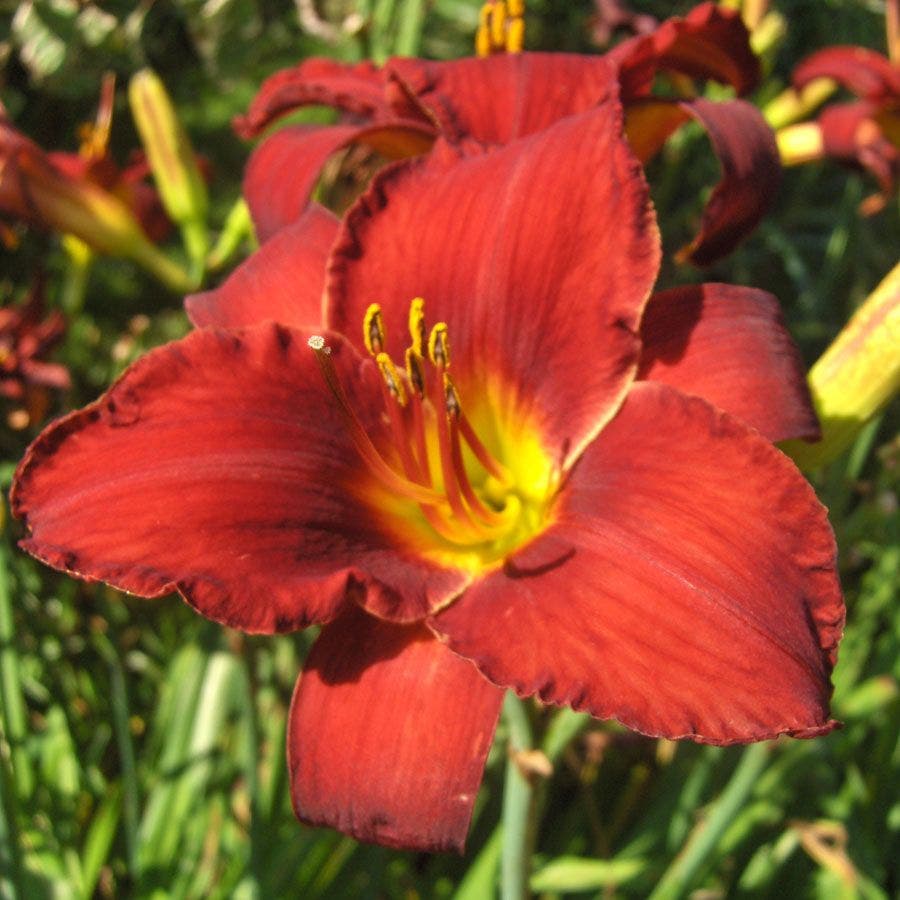
Hemerocallis 'Ruby Stella'
Its 18-20 inch compact clump reblooms through the season in a border too small for larger daylily cultivars.
- Mature size:
- 18-20 in H x 18-24 in W
- Light:
- Full Sun, Part Shade
- Zones:
- 4-9
- Bloom:
- Early Summer to Mid Fall (reblooming)
About $9.95 (checked 2026-09-17)
Check price at Wayside GardensAt $9.95 this is the cheapest way to get a container that reblooms, and its 18 to 20 inch clump fits an 8 gallon pot without crowding. It is also the most forgiving plant here: rated to zone 4, so it survives a pot in zone 5 with no help, and listed for part shade as well as full sun, so it works on a porch that only gets morning light. What it gives up is presence, since a dwarf daylily is a low mound of strappy foliage rather than a structural plant.

Lavandula Sweet Romance®
Its 18-inch mound fits a sunny container or edging strip too small for larger lavender varieties.
- Mature size:
- 18 in H x 18 in W
- Light:
- Full Sun
- Zones:
- 5-9
- Bloom:
- Early Summer to Late Fall
About $24.95 (checked 2026-09-17)
Check price at Wayside GardensThis is the lavender for a pot that has to stay small, an 18 inch mound in a 14 inch container, blooming early summer to late fall. For a sunny railing or a pair of step pots it gives you scent, bees and grey foliage. What it gives up is winter margin: rated to zone 5, it behaves like a zone 6 plant in a container, so cold-zone gardeners should plan on moving it or sinking it.
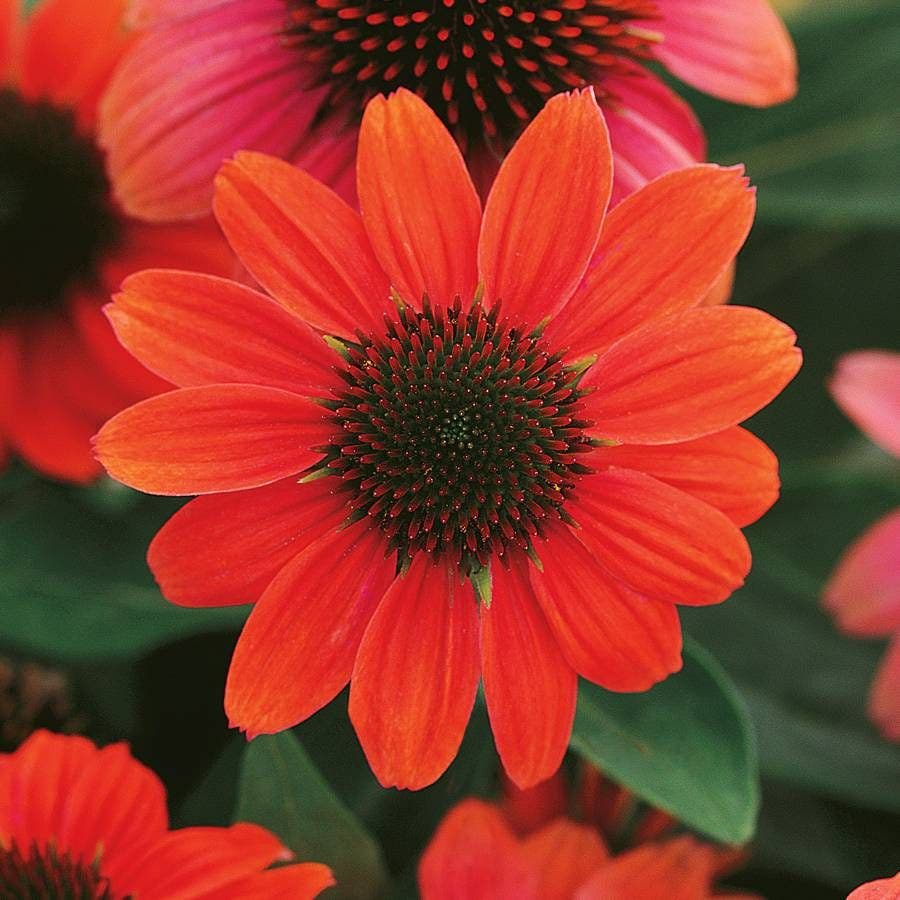
Echinacea Sombrero® Hot Coral Coneflower
Its 2-foot compact habit fits a deck container instead of the 3-4 foot spread of standard coneflowers.
- Mature size:
- 2 ft H x 20 in W
- Light:
- Full Sun
- Zones:
- 4-9
- Bloom:
- Late Spring to Late Summer
About $25.95 (checked 2026-09-17)
Check price at Wayside GardensThe Sombrero coneflower is the structural full-sun pick, holding 2 feet tall in a 20 inch footprint where standard coneflowers sprawl to 3 or 4 feet and outgrow any pot. Its zone 4 rating means it takes a container winter in zone 5 without special treatment. What it gives up is season length, since it finishes in late summer rather than running to frost, so pair it with the daylily or a lavender.
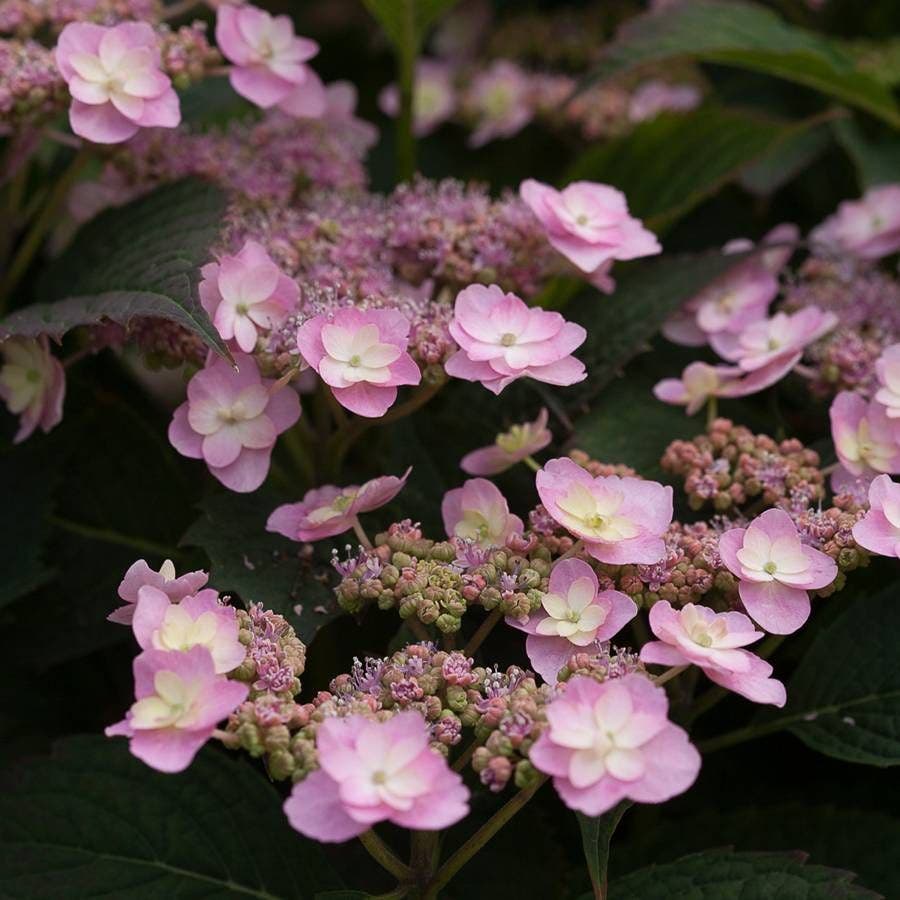
Hydrangea Tiny Tuff Stuff™ Mountain Hydrangea
Stays under 2 feet tall and wide, so it fits a deck container instead of a full hydrangea border.
- Mature size:
- 2 ft H x 2 ft W
- Light:
- Full Sun, Part Shade
- Zones:
- 5-9
- Bloom:
- Late Spring to Mid Fall
About $32.95 (checked 2026-09-17)
Check price at Wayside GardensThis is the one to buy if you want a shrub in a pot rather than a perennial clump, and at 2 ft by 2 ft it is genuinely container-scaled instead of merely small for a hydrangea. It takes part shade, blooms late spring to mid fall, and is the only woody plant here, which means it reads as permanent on a deck. What it gives up is water and volume: give it a 16 to 18 inch pot, 12 to 15 gallons, and expect daily watering in July heat, because a hydrangea in a small pot wilts by mid-afternoon.

Lavandula Phenomenal™
Bred for humid-summer resilience, it suits a hot southern bed where other lavenders struggle.
- Mature size:
- 2.67 ft H x 2.33 ft W
- Light:
- Full Sun
- Zones:
- 5-8
- Bloom:
- Late Spring to Late Fall
About $24.95 (checked 2026-09-17)
Check price at Wayside GardensPhenomenal is the lavender for humid summers, bred for the heat and moisture that rot other varieties, which makes it the pick for a southern deck. It is also the biggest plant in this guide at 2.67 ft tall and 2.33 ft wide, so it needs an 18 inch, 15 gallon pot to behave; in a 12 inch pot it will be root-bound in a season. What it gives up is cold tolerance and portability, with a zone 5 to 8 rating and a pot that size being a two-person lift once it is full of wet soil.
What we'd skip
We would skip full-size cultivars of these same species, the 4 to 6 ft hydrangeas and the 3 to 4 ft coneflowers, no matter how good they look at the nursery in a one gallon pot. A plant that wants a 3 ft root spread needs something closer to 25 gallons of soil, so in a 5 gallon pot it circles its roots in one season, dries out by noon and freezes through by February.
FAQ
what size pot for a perennial
Use a diameter of at least half the plant's mature width and a depth of at least 12 inches, then check the gallons: a 14 inch pot 12 inches deep is 8 gallons and suits an 18 inch plant, while a 2.67 ft lavender wants an 18 inch pot at about 15 gallons. Bigger pots are easier to keep alive because they hold more water and freeze more slowly.
can perennials survive winter in pots
Yes, if you plan one USDA zone colder than the tag, because a pot freezes through where garden soil does not. In zone 5b, treat your containers as 4b: zone 4 plants like the coneflower and daylily are fine, and zone 5 plants like the lavenders need a sheltered wall, a sunken pot or an unheated garage.
how much sun does lavender need in a container
Six or more hours of direct sun, measured where the pot sits rather than where the garden faces. At 4 hours lavender stretches, blooms less and stays wet longer, which is the real killer. If your spot is shadier than that, the daylily and the mountain hydrangea are the two plants here that accept part shade.
Specs and prices come from each retailer's product page on the date shown on the card. This is a research-based comparison, not a hands-on test.
Products in this guide
- Hemerocallis 'Ruby Stella' — Wayside Gardens
- Lavandula Sweet Romance® — Wayside Gardens
- Echinacea Sombrero® Hot Coral Coneflower — Wayside Gardens
- Hydrangea Tiny Tuff Stuff™ Mountain Hydrangea — Wayside Gardens
- Lavandula Phenomenal™ — Wayside Gardens